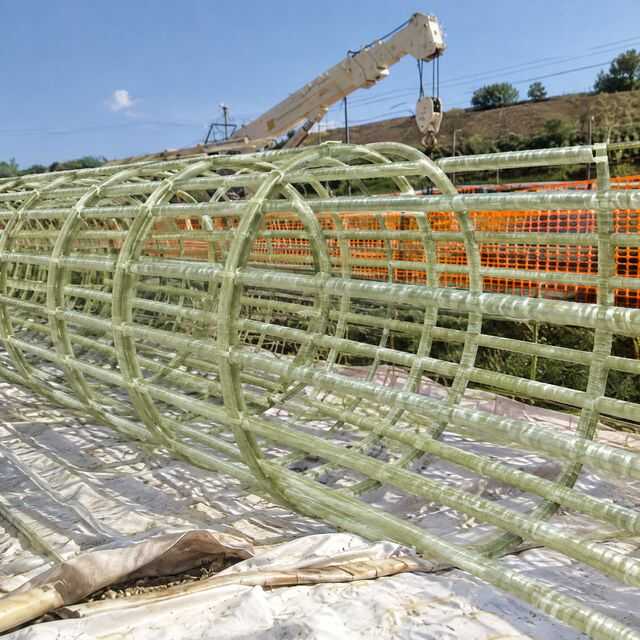
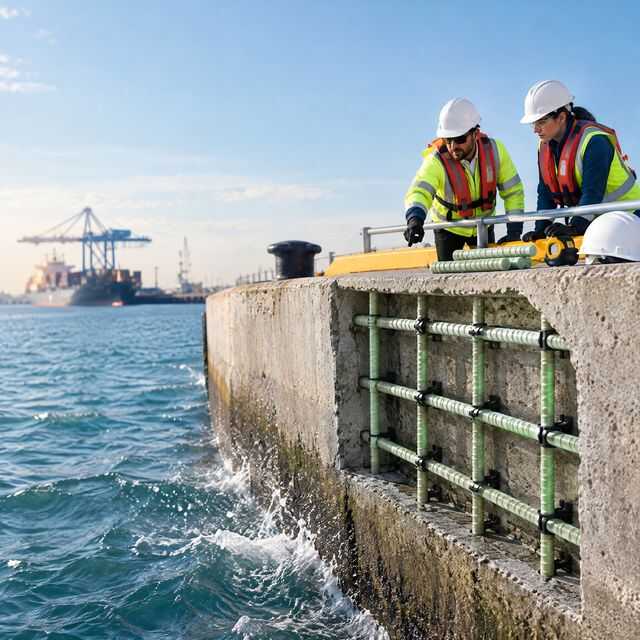
GFRP Rebar in Marine Construction: Solutions for Saltwater Environments
GFRP Rebar in Marine Construction: Solutions for Saltwater Environments
Seawater, salt spray and tidal cycles damage steel reinforcement faster than almost any other environment in construction. GFRP rebar contains no metal, so it does not rust when exposed to chlorides. This article explains why steel fails at sea, how GFRP behaves in marine conditions, where it is used, what to watch for in design and installation, and what research says about its long term durability.
Why Does Steel Reinforcement Fail in Marine Environments?
Concrete protects steel with an alkaline layer. Salt penetrates the pores of the concrete and breaks down that protection. From there, a chain reaction damages the whole structure.
The Corrosion Process in Brief
- Chloride ions travel through the concrete and reach the bar.
- The protective layer on the steel breaks down and rust begins to form.
- Rust occupies much more volume than the original steel and creates internal pressure.
- The concrete cracks and spalls, which lets even more chlorides in.
Especially Vulnerable Zones
- Splash and tidal zone: Repeated wetting and drying concentrates salt near the waterline.
- Coastal atmospheric zone: Wind carries salt particles that enter the concrete.
- Cyclic loads: Waves and vessel impact create fine cracks that let chlorides in.
- Submerged zone: Concrete stays saturated with seawater for years.
The result is repeated maintenance, cathodic protection, repairs and early replacement of elements. [1] [4]
How Does a GFRP Bar Behave in Seawater?
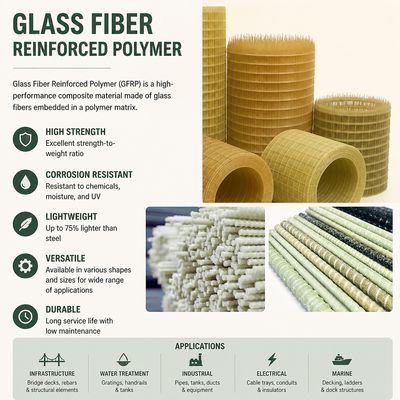
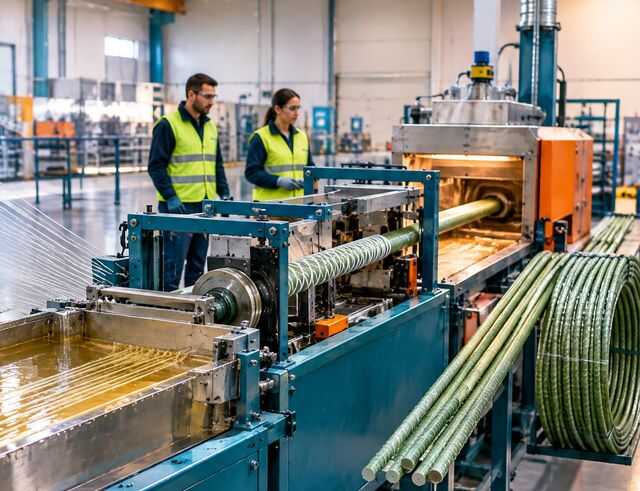
A GFRP bar is made of glass fibers and resin. It has no metal that can rust, so the electrochemical corrosion mechanism of steel does not apply to it.
What the Studies Test
Durability studies on GFRP bars compare them before and after accelerated exposure. The exposure uses simulated seawater concrete pore solution, elevated temperatures and seawater conditions. The tests measure tensile strength, bond to concrete and changes in the material. [1] [4]
What the Results Show
The abstract of one study on seawater concrete reports that GFRP bars retained a large share of their strength under typical field exposure, with a figure of about 92 percent. Behavior depends on the fiber type, the resin and manufacturing quality, so not every bar performs the same. The main degradation path is slow damage to the glass fibers and to the interface between fiber and resin in an alkaline, wet environment. [2] [4]
Please note: Accelerated laboratory results are estimates, not guarantees. Service life of several decades is set in design according to codes and test data for the specific product, not by a general figure.
Main Advantages of GFRP in Marine Construction
Corrosion Resistance
There is no rust and no expanding corrosion products to crack the concrete. This is the central advantage in a salty environment.
Reduced Maintenance
Without a corrosion mechanism, the need for concrete repairs and cathodic protection drops. The savings show up mainly in the cost over the life of the structure.
Low Weight
A GFRP bar is much lighter than steel. On a pier, a barge or a site with limited access, this makes transport, lifting and placement easier.
Nonconductive and Nonmagnetic
This suits facilities with sensitive electronic equipment, navigation systems and sites where a magnetic signature must be avoided.
Resistance to Cyclic Loads
Piers and quays carry wave loads, berthing forces and traffic. GFRP suits such loads when it is designed according to the relevant code.
Where Is GFRP Used in Marine Construction?
The table summarizes common marine structures and the contribution of GFRP in each.
| Structure Type | Main Challenge | GFRP Contribution |
|---|---|---|
| Ports and quays | Seawater, cargo loads and vessel impact | Reinforcement that does not rust and reduces repairs |
| Piers and marinas | Constant moisture and tidal cycles | Durability in the splash and submerged zones |
| Breakwaters and sea walls | Direct exposure to waves and salt | Long service life without cathodic protection |
| Promenades and coastal areas | Salt spray and public use | No rust stains and low maintenance |
| Pools and saltwater facilities | Constant contact with salt water | Reinforcement unaffected by chlorides |
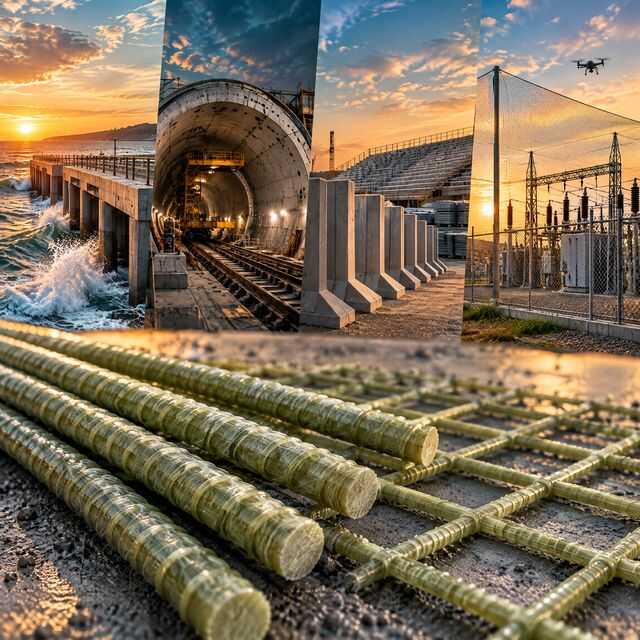
In all of these structures the idea is the same. Reinforcement that chlorides attack is replaced with reinforcement that does not react to them, and the rest of the design is adjusted accordingly. [1] [5]
Comparing GFRP and Steel at Sea
This comparison is qualitative. Numerical values vary between manufacturers and products, so take them from the product certificates.
| Aspect | GFRP | Steel Rebar |
|---|---|---|
| Corrosion in chlorides | Does not rust | Rusts and cracks the concrete |
| Weight | Much lighter | Heavy |
| Stiffness | Lower elastic modulus, so cracking and deflection are checked in design | High modulus |
| Behavior under load | Elastic up to rupture, with no yield plateau | Yields and gives warning before failure |
| Conductivity and magnetism | Nonconductive and nonmagnetic | Conductive and magnetic |
| Cathodic protection | Not needed for corrosion | Sometimes required |
| Initial cost | Usually higher | Usually lower |
The table shows that the strength of GFRP is durability and low maintenance, while its limits are lower stiffness and brittle behavior. Both require proper design and neither cancels the advantage.
When Steel Is Still the Better Choice
Steel may remain the right choice when the structure is temporary, when the design depends on high stiffness or ductility, or when the applicable code does not allow GFRP for a specific element. The structural engineer makes that decision.
Installation Guidelines for Marine Projects
Most operations resemble work with steel, but a few differences matter especially in a marine setting.
Storage and Handling
- Store the bars on a flat surface, raised off the ground.
- Cover them with an opaque sheet to protect them from UV radiation before the pour.
- Avoid dragging and impacts that damage the bar surface.
Cutting and Tying
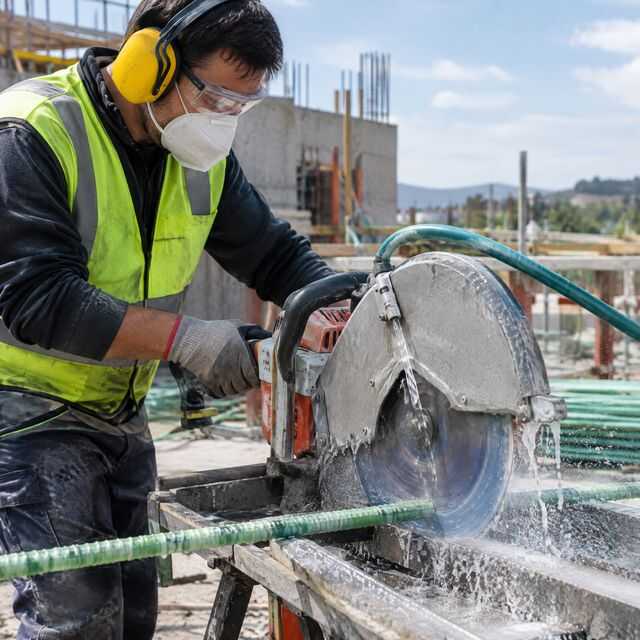
- Cut with a saw or grinder and a suitable blade, never with a torch or heat. [5]
- Tie with plastic ties or a noncorroding material, not with ordinary steel wire.
- Use plastic chairs and spacers to keep the concrete cover.
Pouring and Inspection
- Vibrate carefully so the bars are not damaged.
- Confirm cover, lap lengths and spacing against approved drawings and the design code.
- In tidal work, coordinate the pour with water levels and the placement method set in design.
- Match the marine concrete mix to code requirements and manufacturer guidance.
Please note: Bends and stirrups of GFRP are made at the factory according to the reinforcement plan. They are not formed on site.
Long Term Durability and What Affects It
The service life of a GFRP bar at sea depends on several factors worth knowing at the design stage.
- Bar quality: Fiber type, resin type, impregnation and curing all influence durability. [4]
- Concrete alkalinity: A strongly alkaline environment attacks glass fibers over time, so choose a product tested for these conditions.
- Temperature and moisture: Heat and moisture speed up degradation, which is why studies use them to simulate years of service.
- Mechanical damage: Harm during transport, cutting or pouring shortens bar life.
- Fire exposure: Resin loses strength at high temperatures, so fire requirements must be considered.
Research on service life prediction explains that long term estimates rely on models of strength change over time. These estimates are updated as new field data arrives, so they should not be treated as a warranty. [3] [1]
Frequently Asked Questions About GFRP in Marine Construction
Does GFRP really not rust?
Correct. The bar contains no metal, so it does not undergo electrochemical corrosion. The alkaline, wet environment can still affect the fibers and resin over time, so it is important to choose a tested product. [2]
Can GFRP be used in every marine element?
Not necessarily. Suitability depends on design, loads, fire requirements and the governing code. This is a decision for a structural engineer.
Is cathodic protection needed with GFRP?
Because the bar does not rust, cathodic protection designed for steel is not needed for it. If the project also has steel elements, they still need protection.
Why does the lower modulus matter?
A GFRP bar is more flexible than steel, so elements may crack or deflect more. Design accounts for this when choosing bar diameter, quantity and cover.
Can a bar be bent on site?
No. A finished bar cannot be bent with heat or force, so bends are ordered from the factory according to the plan.
Summary and Recommendations
At sea, GFRP solves the main problem of steel, and project success depends on choosing a tested product and designing correctly. To proceed well:
- Choose a product with test certificates and durability data for saltwater conditions.
- Design according to the relevant code with a licensed structural engineer.
- Account for the lower modulus, the brittle behavior and fire requirements.
- Order bends and stirrups from the factory, and store bars protected from sunlight.
- Supervise cover, tying and pouring according to approved drawings.
For bars, meshes and bent elements, see the manufacturer site 7Star GFRP. [6]
Sources and References
- Durability Assessment of GFRP Rebars Exposed to High Alkalinity, Scipedia. A study of three GFRP bar types before and after aging in simulated seawater concrete pore solution.
- Durability of GFRP Bars in Seawater Concrete, Scribd. A paper on GFRP bar durability in seawater concrete. Its abstract reports about 92 percent retention under typical field exposure.
- Durability and Service Life Prediction of GFRP Bars Embedded in Concrete under Acid Environment, ResearchGate. A study on bond durability and service life prediction. It addresses an acid environment, not a marine one, and is used here only to illustrate the estimation method.
- GFRP Reinforcement in Concrete: Durability Assessment, University of Miami. A doctoral thesis examining the physical and mechanical properties of GFRP bars after accelerated seawater conditioning.
- FRP vs Steel Specs, ASTM D7957 Standards and Cost, GFRP Rods. A commercial source noting field cutting with a diamond blade circular saw or a grinder with a masonry blade.
- 7Star GFRP. The manufacturer site, which presents bars, meshes and bent elements.
Legal Disclaimer and Important Notes
Purpose of the article: This article provides general professional information for the public, contractors, developers and practitioners. It is intended for education and understanding only.
Not a substitute for professional advice: Nothing in this article constitutes engineering design, a professional opinion, execution instructions or a replacement for the guidance of a licensed engineer. Every project differs in conditions, loads, environment and applicable legal requirements.
Duty to consult a licensed engineer: Before any use, installation, modification or design involving GFRP bars or any structural component, and especially in marine structures, obtain guidance, approval and supervision from a licensed structural engineer. Act according to approved plans, applicable standards and the binding instructions of the manufacturer.
Service life and durability: Research results and accelerated tests are estimates and are not a commitment to service life in a specific project. Verify product performance against the manufacturer’s valid test certificates and approvals.
Occupational safety: Working with composite materials and in marine settings involves risks, including dust, sharp fragments, work at height and work over water. Follow occupational safety law and the instructions of the site safety officer.
Accuracy and currency of information: Reasonable effort has been made to present accurate and current information. No commitment is given as to its completeness, accuracy or suitability for a particular purpose.
Third party references: The article links to external sources, including studies, commercial sites and manufacturer sites. The links are provided for illustration and further reading only and do not constitute a recommendation or an endorsement of their content. Responsibility for the content of those sites rests with their owners.
Limitation of liability: Subject to applicable law, the website, its owners and the authors of the article are not liable for any damage, loss or expense, direct or indirect, resulting from reliance on the article or its use. Any reliance on the information is the sole responsibility of the user.
Copyright: All rights in the article are reserved. It may not be copied, distributed or published, in whole or in part, without prior written permission.