
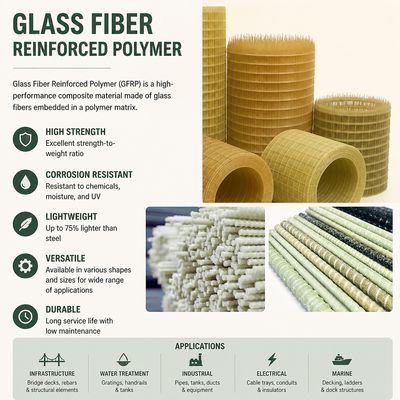
GFRP: Glass Fiber Reinforced Polymer
GFRP: Glass Fiber Reinforced Polymer as an Advanced Engineering Material
A scientific-engineering overview of GFRP material composition, behavior, applications, benefits, and design considerations in modern infrastructure and industry.
Glass Fiber Reinforced Polymer, commonly referred to as GFRP, is a composite material consisting of high-strength glass fibers embedded within a polymeric matrix. It belongs to the broader family of fiber-reinforced polymer composites, which are engineered materials designed to combine the mechanical efficiency of fibers with the environmental resistance and formability of polymers. Over the past several decades, GFRP has become increasingly important in civil engineering, infrastructure, industrial facilities, transportation, energy systems, and marine applications due to its high strength-to-weight ratio, corrosion resistance, electrical insulation properties, and relatively low maintenance requirements.
The growing use of GFRP reflects a broader shift in engineering practice toward materials that provide long service life under demanding environmental conditions. Traditional metallic materials, particularly carbon steel, offer high stiffness and ductility but are vulnerable to corrosion when exposed to moisture, chlorides, chemicals, or marine environments. Corrosion can reduce structural capacity, increase maintenance costs, and shorten the service life of infrastructure. GFRP addresses many of these concerns by offering a non-corrosive alternative with favorable mechanical and durability characteristics.
Material Composition and Structure
GFRP is composed of two primary constituents: glass fibers and a polymer matrix. The glass fibers act as the main load-carrying component, particularly under tensile loading. The polymer matrix binds the fibers together, transfers stresses between them, protects them from mechanical damage and environmental exposure, and provides the composite with its overall shape and stability.
The most common type of glass fiber used in GFRP is E-glass, which offers good mechanical performance, electrical insulation, and cost efficiency. Other glass fiber types may be used when specific performance requirements exist. For example, S-glass provides higher tensile strength and improved mechanical performance, while C-glass offers enhanced chemical resistance. The selection of fiber type depends on the required strength, exposure conditions, service environment, and economic constraints of the project.
The polymer matrix is typically made from thermosetting resins such as polyester, vinyl ester, or epoxy. Polyester resins are widely used because of their relatively low cost and acceptable mechanical properties. Vinyl ester resins provide improved chemical resistance and are often selected for aggressive industrial or marine environments. Epoxy resins generally offer superior adhesion, mechanical performance, and fatigue resistance, making them suitable for demanding structural applications and strengthening systems.
The mechanical behavior of GFRP depends strongly on the orientation, volume fraction, and distribution of the fibers, as well as the quality of the bond between the fibers and the polymer matrix. When fibers are aligned in a specific direction, the material exhibits anisotropic behavior, meaning that its properties vary depending on the direction of loading. For example, a GFRP reinforcing bar with fibers aligned along its length has high tensile strength in the longitudinal direction but lower strength and stiffness in transverse directions.
Mechanical and Physical Properties
One of the most important characteristics of GFRP is its high strength-to-weight ratio. Its density is significantly lower than that of steel, allowing engineers to reduce the weight of structural and industrial components while maintaining adequate load-bearing capacity. This property is especially valuable in applications where transportation, installation, manual handling, or dead load reduction are important considerations.
GFRP typically demonstrates high tensile strength, particularly in the direction of fiber alignment. However, its modulus of elasticity is generally lower than that of steel. This means that while GFRP can resist high tensile loads, it may undergo larger elastic deformations under service loads compared with steel. As a result, serviceability criteria such as deflection, crack width, and vibration behavior are often critical in the design of GFRP-reinforced structural elements.
Unlike steel, GFRP does not exhibit significant yielding before failure. Its failure mode is generally more brittle, with limited plastic deformation. This characteristic requires a different design philosophy from conventional steel design. Engineers must consider appropriate safety factors, material reduction factors, serviceability requirements, and environmental exposure conditions. Design standards and guidelines for GFRP applications typically account for these differences through specific calculation methods and conservative assumptions.
Another important physical property of GFRP is its resistance to corrosion. Since it does not contain iron, it does not rust when exposed to water, oxygen, chlorides, or many chemical agents. This makes it particularly suitable for environments where steel reinforcement or steel components would require protective coatings, cathodic protection, or frequent maintenance.
GFRP also provides good electrical insulation and is non-magnetic. These characteristics are beneficial in applications involving electrical infrastructure, railway systems, telecommunications facilities, medical environments, and structures where electromagnetic interference must be minimized. In addition, GFRP has relatively low thermal conductivity compared with metals, which can be advantageous in certain building envelope, industrial, and utility applications.
Engineering Advantages of GFRP
The primary engineering advantage of GFRP is its durability in aggressive environments. In reinforced concrete structures, corrosion of steel reinforcement is one of the main causes of deterioration. When steel corrodes, corrosion products expand and generate internal pressure within the concrete, causing cracking, spalling, loss of bond, and reduction in structural capacity. Replacing steel reinforcement with GFRP bars can significantly reduce the risk of corrosion-related deterioration, especially in bridges, parking structures, marine facilities, seawalls, wastewater treatment plants, and structures exposed to de-icing salts.
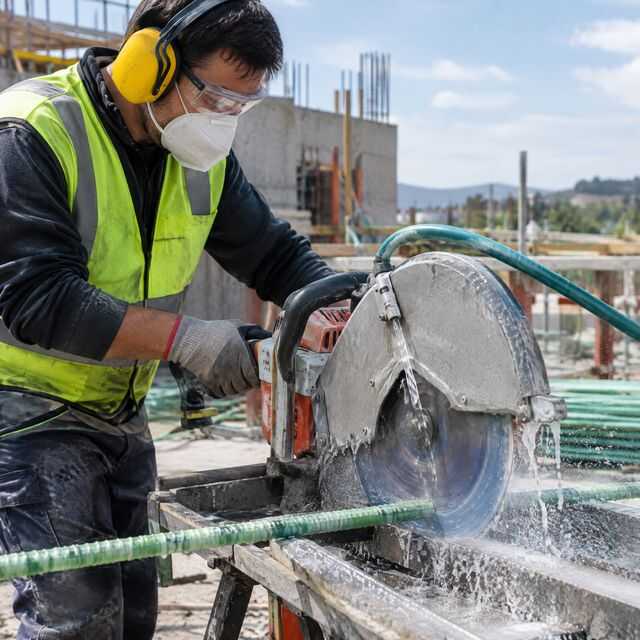
The lightweight nature of GFRP is another significant advantage. Components made from GFRP are easier to transport, lift, cut, and install than comparable steel components. This can reduce construction time, labor requirements, and the need for heavy lifting equipment. In remote locations, confined spaces, or rehabilitation projects where access is limited, the handling advantages of GFRP can provide substantial practical benefits.
GFRP also requires relatively low maintenance over its service life. Since it is resistant to corrosion and many chemicals, it can reduce the frequency of inspections, repairs, replacements, and protective treatments. Although the initial material cost may sometimes be higher than that of traditional steel, life-cycle cost analysis often shows economic benefits when reduced maintenance, longer service life, and lower downtime are considered.
From a design perspective, GFRP offers high flexibility in manufacturing. It can be produced as reinforcing bars, grids, profiles, panels, gratings, pipes, tanks, sheets, fabrics, and custom-molded components. This versatility allows engineers and manufacturers to tailor the material to specific performance requirements, geometric constraints, and environmental exposure conditions.
Main Applications of GFRP
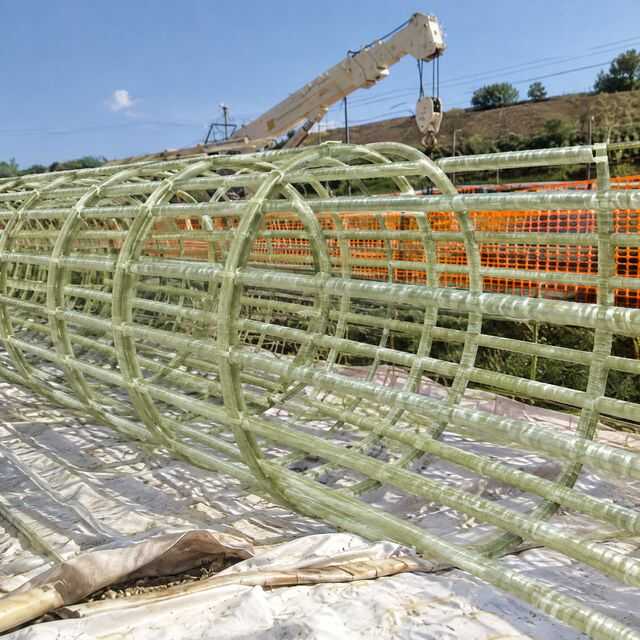
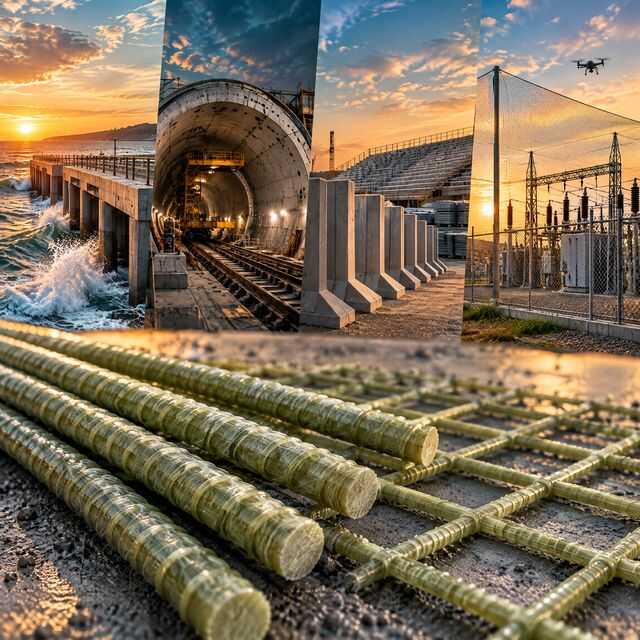
In civil engineering, one of the most important applications of GFRP is as internal reinforcement for concrete. GFRP reinforcing bars are used as an alternative to steel reinforcement in structures exposed to corrosive environments. Common applications include bridge decks, approach slabs, barrier walls, marine structures, retaining walls, tunnels, water treatment facilities, and industrial floors. The use of GFRP reinforcement can improve durability and extend the service life of concrete structures by eliminating the risk of reinforcement corrosion.
GFRP is also widely used for the strengthening and rehabilitation of existing structures. Sheets, fabrics, strips, or laminates made from GFRP can be externally bonded to concrete, masonry, timber, or steel elements to increase flexural strength, shear strength, confinement, or seismic performance. This technique is commonly used to upgrade beams, slabs, columns, walls, and bridge components. Because GFRP strengthening systems add minimal weight and thickness, they are often preferred where architectural clearance, structural weight, or construction time is limited.
In industrial applications, GFRP is commonly used to manufacture gratings, ladders, handrails, platforms, cable trays, pipes, tanks, and structural profiles. These products are especially useful in chemical plants, wastewater treatment facilities, desalination plants, offshore platforms, power plants, food processing facilities, and other environments where corrosion resistance is essential. GFRP gratings, for example, provide a lightweight, durable, and non-conductive alternative to steel gratings in aggressive service conditions.
In the transportation sector, GFRP is used for lightweight vehicle components, railway infrastructure, pedestrian bridges, composite panels, and marine vessels. Weight reduction contributes to improved energy efficiency, easier installation, and reduced structural loads. In marine applications, the resistance of GFRP to saltwater exposure makes it suitable for boat hulls, decks, docks, fenders, and coastal infrastructure.
The energy sector also benefits from GFRP materials. They are used in wind turbine blades, electrical utility components, insulating structures, solar panel supports, and equipment enclosures. In these applications, the combination of low weight, corrosion resistance, and electrical insulation provides both functional and economic advantages.
Limitations and Design Considerations
Despite its many advantages, GFRP is not a universal replacement for steel or other engineering materials. Its lower modulus of elasticity must be carefully considered, particularly in structural applications where stiffness controls the design. In reinforced concrete members, crack width and deflection may govern the design rather than ultimate strength. Therefore, engineers must apply appropriate serviceability checks and follow relevant design standards.
The brittle failure behavior of GFRP is another important consideration. Because it does not yield like steel, structures reinforced or strengthened with GFRP must be designed to avoid sudden and undesirable failure modes. Proper detailing, conservative design assumptions, and reliable quality control are essential.
Temperature sensitivity must also be considered. The polymer matrix can lose stiffness and strength when exposed to high temperatures, particularly near or above its glass transition temperature. Fire exposure, thermal cycling, and long-term elevated temperature conditions may affect performance. For applications requiring fire resistance, additional protective measures or specialized resin systems may be necessary.
Long-term behavior under sustained loading is another design factor. Creep, fatigue, moisture absorption, ultraviolet exposure, and chemical attack can influence the durability and mechanical properties of GFRP over time. These effects depend on the type of fibers, resin system, manufacturing quality, protective coatings, and service environment. For this reason, material testing, certification, and compliance with recognized standards are essential for critical applications.
Conclusion
GFRP is an advanced composite material that offers a compelling combination of strength, light weight, corrosion resistance, electrical insulation, and design versatility. Its structure, based on glass fibers embedded in a polymer matrix, enables engineers to develop components and systems that perform effectively in environments where traditional materials may deteriorate rapidly or require intensive maintenance.
Its most significant value is seen in applications exposed to moisture, chlorides, chemicals, marine conditions, or electrical constraints. In civil infrastructure, GFRP reinforcement can improve the durability of concrete structures and reduce corrosion-related damage. In industrial settings, GFRP components provide long-lasting alternatives to metallic systems in chemically aggressive environments. In transportation, energy, and marine applications, its low weight and environmental resistance support efficient and durable design solutions.
However, the successful use of GFRP requires an understanding of its material behavior, including anisotropy, lower stiffness compared with steel, brittle failure characteristics, and temperature sensitivity. When properly designed, manufactured, and installed according to engineering standards, GFRP provides a highly effective material solution for modern infrastructure and industrial systems. As the demand for durable, low-maintenance, and sustainable engineering materials continues to increase, GFRP is expected to play an increasingly important role in future construction and technological development.


Hi, this is a comment.
To get started with moderating, editing, and deleting comments, please visit the Comments screen in the dashboard.
Commenter avatars come from Gravatar.