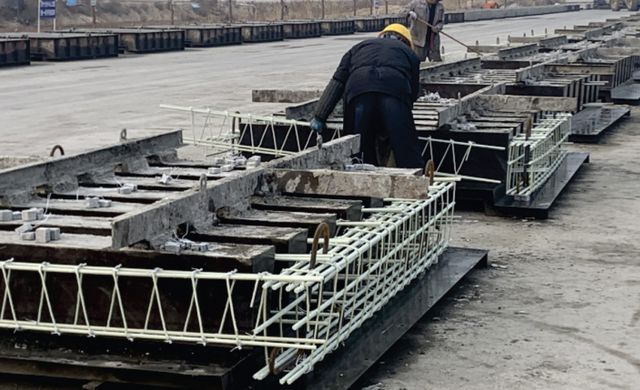
GFRP Rebar Compared to Steel Rebar
Advantages of GFRP Rebar Compared to Steel Rebar: A Professional Guide for Engineers, Contractors and Developers
Steel bars have reinforced concrete for decades, but they corrode. Rust expands, cracks the surrounding concrete and shortens the life of the structure. GFRP (glass fiber reinforced polymer) rebar solves the problem at its root. This guide covers seven key advantages, a direct comparison with steel, the limitations you need to know, and a Q&A section.
What Is GFRP Rebar, and Why Consider It Instead of Steel?
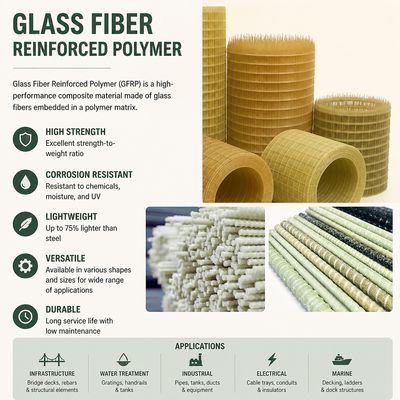
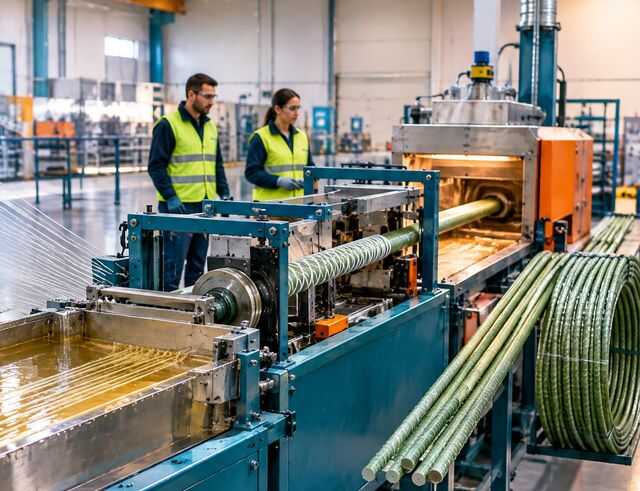
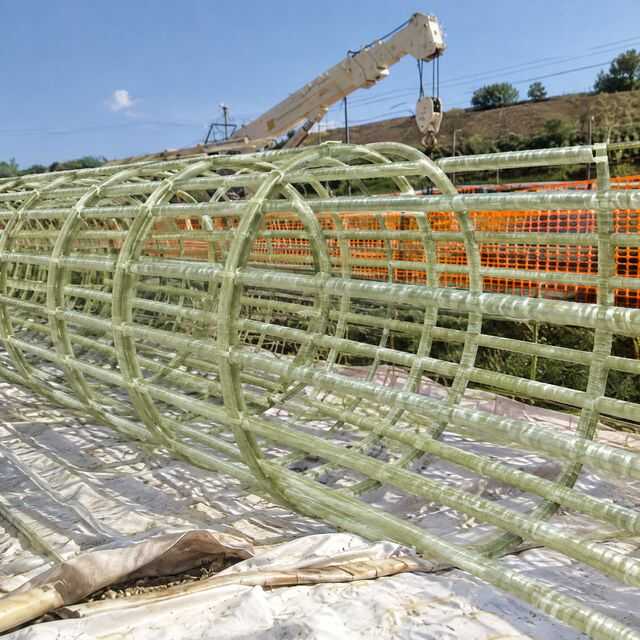
GFRP rebar is a composite bar. Continuous glass fibers are embedded in a polymer resin. It does the job of steel by carrying tensile stresses in concrete, but it contains no iron. Research presents it as a more durable alternative to steel, with a high strength-to-weight ratio.
That is why designers of bridges, marine structures and infrastructure choose it more and more often. Studies of the microstructure of GFRP bars describe them as a corrosion-resistant alternative to traditional steel reinforcement.
The Seven Key Advantages of GFRP Rebar
1. Complete Corrosion Resistance
GFRP does not rust. It does not react with moisture, chlorides or salts. This removes the most common failure mechanism in reinforced concrete in marine environments, bridges and parking structures.
- Marine environments: Coastal structures, piers and seawalls gain a longer service life.
- De-icing salts: In countries with harsh winters, chlorides destroy steel but not GFRP.
- Chemical industry: The bar withstands aggressive process environments.
Professional sources present GFRP as a durable alternative that does not suffer from corrosion.
2. High Tensile Strength and Low Weight
The tensile strength of FRP rebar is typically 1.5 to 2 times that of regular steel. The bar also suits applications with repeated loading. GFRP rebar is also much lighter than steel, and supplier data cites up to four times less weight.
On site, this means fewer truck trips, less crane work and less physical strain on workers.
3. Faster, Safer and More Economical Installation
A light bar lets a small crew place it quickly. Injuries drop, and so do labor costs. The advantage is especially clear at remote sites or sites with limited access.
4. Lower Maintenance Costs Over the Structure’s Life
The upfront price of GFRP per meter may be higher. A life-cycle cost calculation, however, shows savings on crack repairs, replacement of damaged concrete and rehabilitation work. Anyone planning for 50 to 100 years should compare by life-cycle cost, not by purchase price.
The basis for these savings is that the material does not corrode.
5. Electromagnetic Transparency and Electrical Insulation
GFRP does not conduct electricity and is not magnetic. It therefore suits MRI rooms, electrical substations, laboratories and light rail lines. In all of these, steel interferes with sensitive equipment or creates stray currents.
6. Good Bond with Concrete and Hybrid Solutions
The bond between bar and concrete is a central design parameter. Studies examine the bond behavior of GFRP, including hybrid bars that combine GFRP with steel.
Note: The thermal expansion of GFRP is similar to that of concrete in the longitudinal direction, but higher in the transverse direction. It is therefore important to meet the concrete cover requirements in the relevant standard.
7. Contribution to Sustainable Construction
A structure with a longer life consumes fewer materials and replacements, so its lifetime carbon footprint is smaller. This is an advantage in projects that target green building standards.
Quick Comparison: GFRP vs. Steel
The table summarizes the main differences between the two materials.
| Parameter | GFRP | Steel |
|---|---|---|
| Corrosion resistance | Very high | Corrodes |
| Tensile strength | 1.5 to 2 times higher | Moderate |
| Weight | Very light | Heavy |
| Electrical conductivity | Non-conductive | Conductive |
| Bending on site | Cannot be bent on site | Can be bent |
GFRP wins on durability, weight and strength. Steel keeps its advantage in bendability and in design familiarity.
What to Know Before Replacing Steel with GFRP
Knowing the limitations prevents design mistakes:
- No ductility: GFRP does not “yield” like steel. It fails by sudden rupture. Designers therefore work to dedicated codes with different safety factors.
- Low modulus of elasticity: Beam deflections are larger, and they often govern the design.
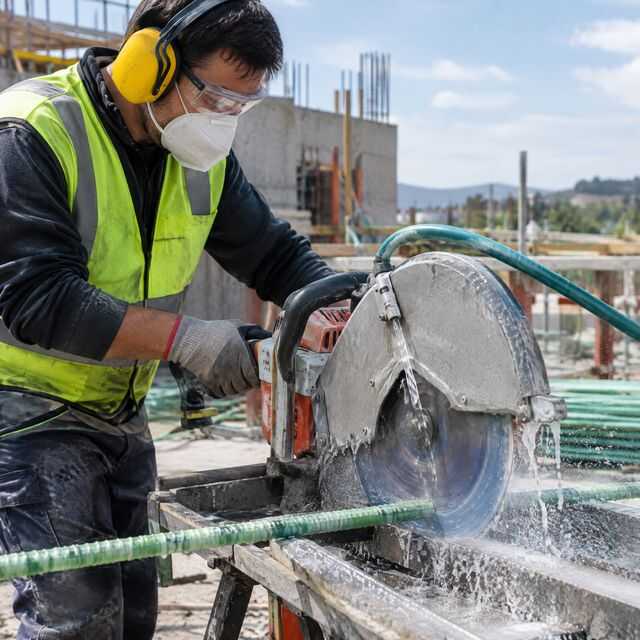
- Bending: Bends and stirrups are produced in the factory, not on site.
- Fire: The polymer resin is sensitive to high temperatures, so fire resistance must be designed for.
- Concrete alkalinity: The alkaline environment of concrete can damage low-quality glass fibers. It is therefore important to choose a certified, proven product.
Frequently Asked Questions About GFRP Rebar
Is GFRP rebar stronger than steel?
In tensile strength, yes. Sources cite a strength 1.5 to 2 times that of steel. However, the modulus is lower and there is no ductility, so the design approach is different.
Does GFRP rust?
No. It is made of glass fibers and resin, and contains no iron that could rust. This is the main reason for using it in salty environments.
How much lighter is GFRP than steel?
According to supplier data, up to four times lighter. The exact value depends on the diameter and the product.
Can a GFRP bar be bent on site?
No. Bends and stirrups are prefabricated in the factory according to the reinforcement drawings.
When is GFRP the right choice?
In marine environments, bridges, infrastructure exposed to salts, environments sensitive to magnetic fields, and any project where life-cycle cost matters more than purchase price.
Is GFRP suitable for every element in a building?
Not always. In elements that require high ductility, such as columns under seismic loading, designers sometimes use a hybrid solution or steel. Consult a structural engineer.
Summary and Implementation Recommendations
GFRP offers durability, low weight, high strength and a long service life. To get the most from it:
- Choose a certified product with laboratory test reports.
- Design to a dedicated FRP code, not to steel rules.
- Order pre-bent shapes from the factory.
- Compare options by life-cycle cost.
Sources and References
- Investigation of bond in concrete of GFRP and steel hybrid rebar, ResearchGate
- FGC Rebar vs Steel Rebar: Key Differences, Pros, and Cons. This is a commercial supplier source, so its figures require verification.
- GFRP vs Steel Rebar in Concrete Beams, Scribd. This is an academic presentation, not a peer-reviewed paper.
- Microstructure Characteristics of GFRP Reinforcing Bars in Concrete, Wiley, Advances in Materials Science and Engineering
Quantitative values vary between manufacturers. Before design, check the relevant standards, for example ACI 440.1R, and the product certificates.