Glass Fiber Reinforced Polymer

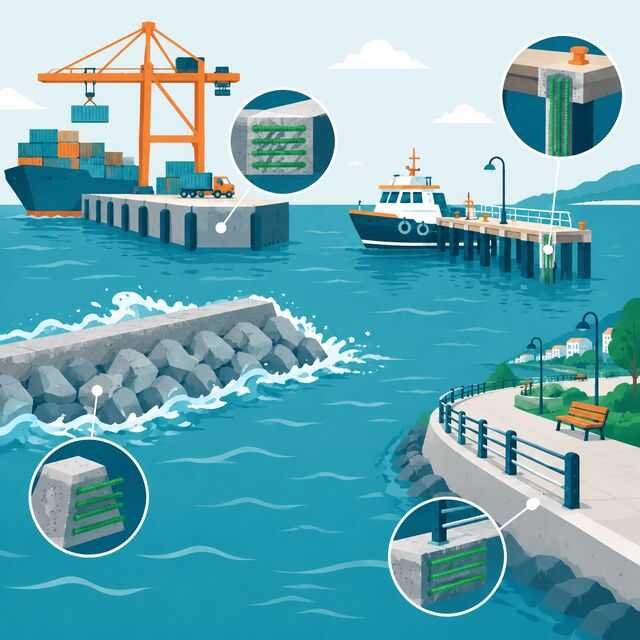
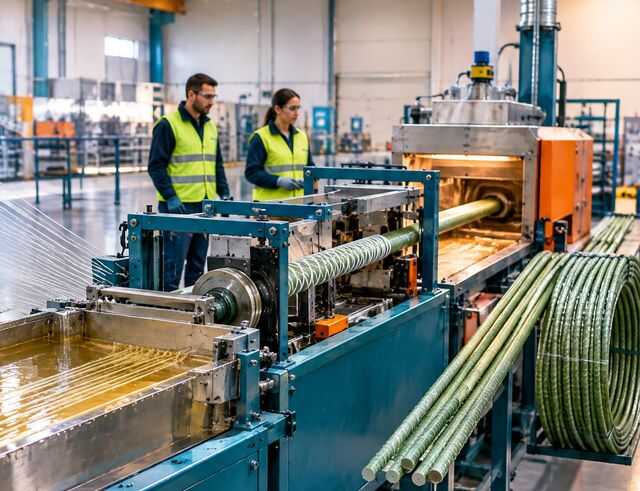
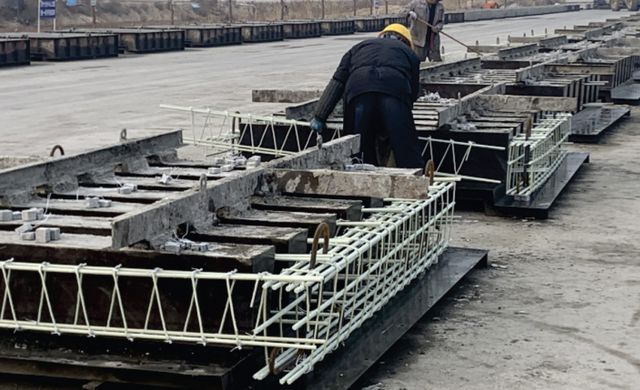
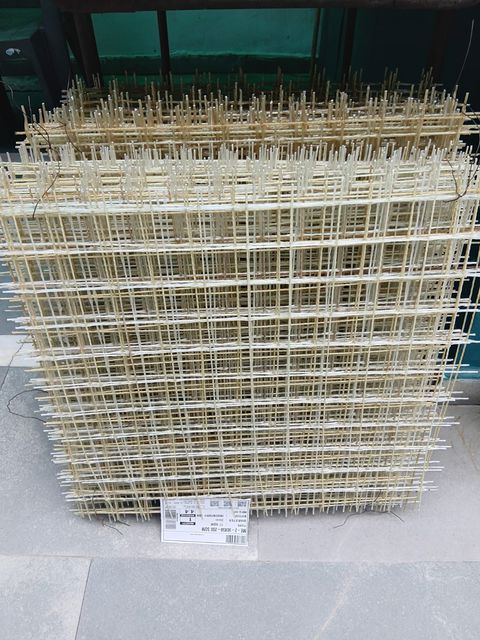
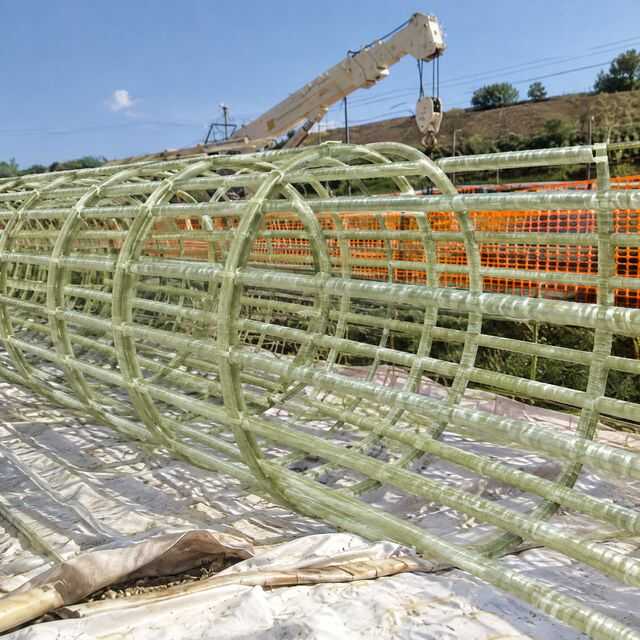
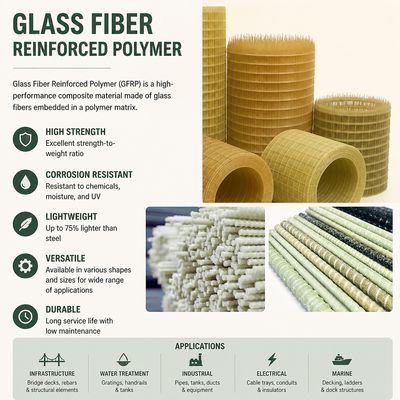
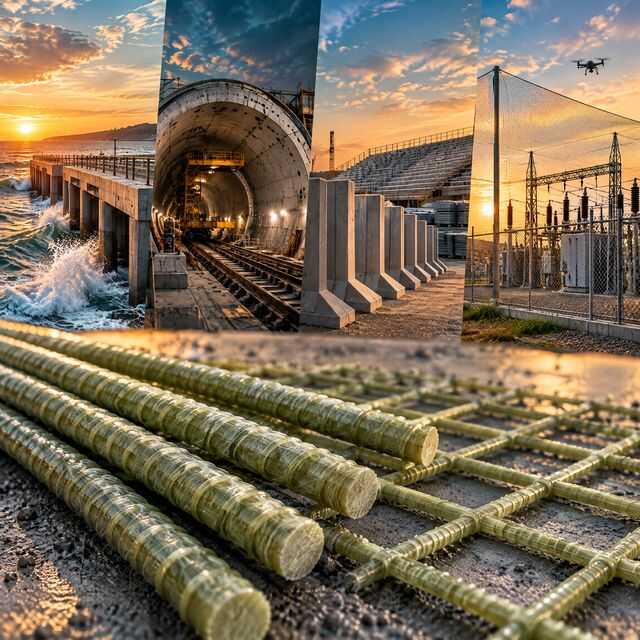
**Glass fiber reinforced polymer (GFRP)** is a composite material made of fine glass fibers embedded in a polymer resin matrix, usually epoxy, vinyl ester or polyester. The fibers carry most of the tensile load. The resin binds them together, protects them and transfers stress between them. The result is lightweight and strong along the fiber direction. It doesn’t rust, and it is non-conductive and non-magnetic. Its history goes back to the 1930s, when fiberglass composites were first used in boats. Research on their use in construction began in the 1950s, pultrusion improved quality in the 1970s, and corrosion problems in existing buildings raised interest in the 1980s. Japan led its use in the 1990s, and China became the largest user for new structures in the 2000s. In construction it is made into rebar, mesh, bent elements, panels and profiles. It is used in roads, bridges, tunnels, marine structures, precast concrete, MRI rooms, power stations and protective installations. It also has limits. It has no yield point and fails in a brittle way, its elastic modulus is lower than steel’s, and its long-term behavior depends on the resin, the fibers and the environment. Bars can’t be bent on site, so bends are made in the factory. Design must be done by a licensed structural engineer under the applicable code. Claims of strength above steel, much lower weight and cost savings come from manufacturers and should be verified against test certificates and local standards. More at [7stargfrp.com](https://www.7stargfrp.com/).